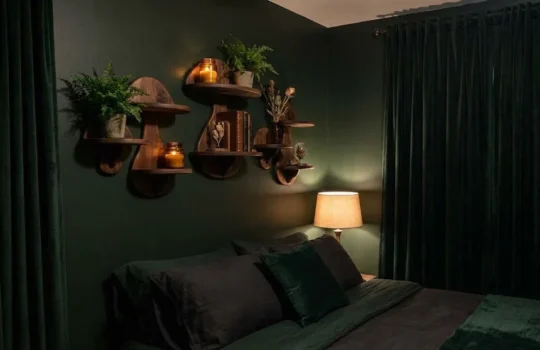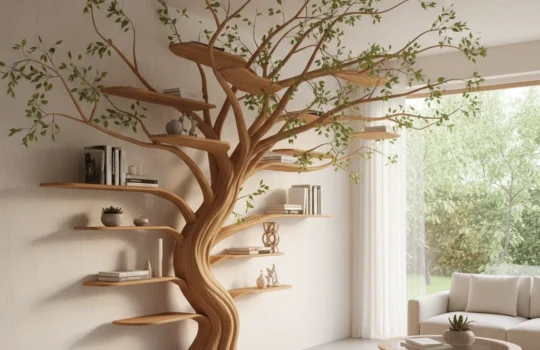
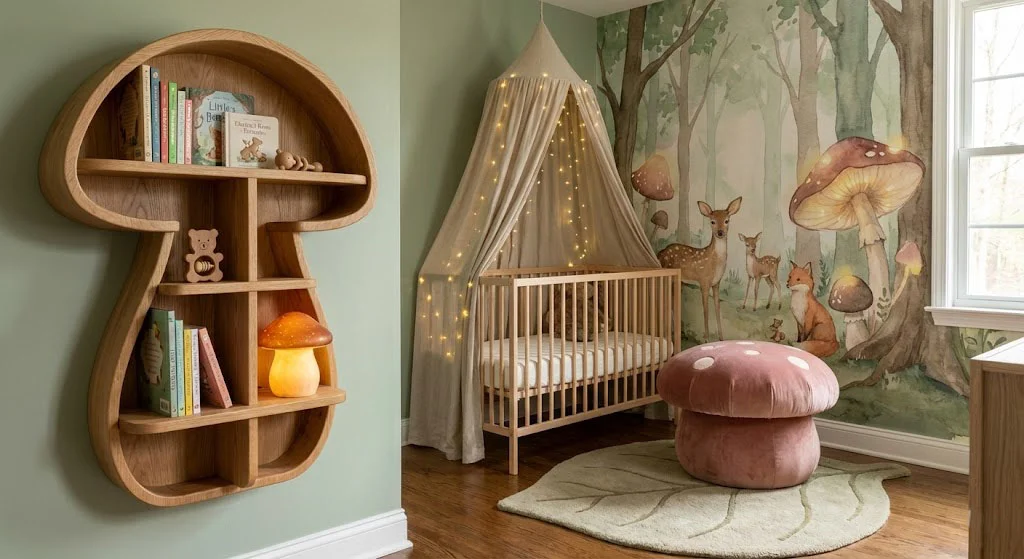
In 2026, the American nursery has undergone a profound transformation. Modern parents are moving away from the plastic-filled, neon-colored rooms of the past and embracing what design experts call “Earth-bound Parenting.” Leading this movement is the Fairycore Nursery—a design theme that blends the whimsical elements of a storybook forest with the grounded, sustainable principles of Woodland design. It’s about creating a space that feels less like a room and more like an enchanted clearing in the woods where your baby can dream, grow, and wonder.
The Fairycore Palette: Beyond Basic Pastels
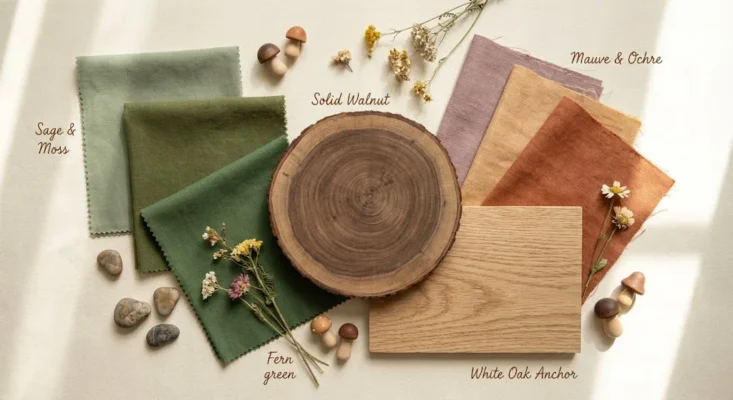
Forget the generic “baby blue” or “powder pink.” The 2026 Fairycore palette is sophisticated, organic, and designed to grow with your child.
-
The Greens: Think Sage, Moss, and Fern. These tones are scientifically proven to have a calming effect on the nervous system.
-
The Florals: Soft, dusty tones like Mauve, Ochre, and Terracotta add warmth without being overwhelming.
-
The Anchor: Solid Wood. The natural brown tones of Walnut or Oak provide the “earth” that holds the magical elements together.
The Star Feature: Handcrafted Mushroom Ledges
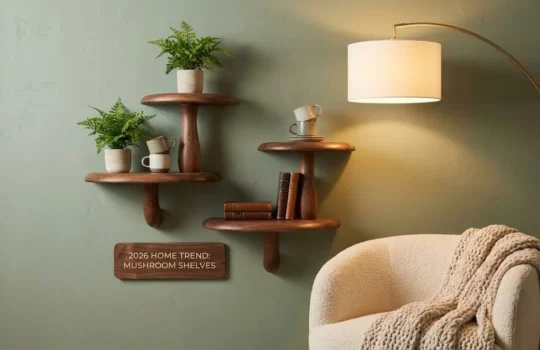
In a Woodland-themed room, traditional boxy bookshelves can feel too rigid. Enter the Mushroom Ledge.
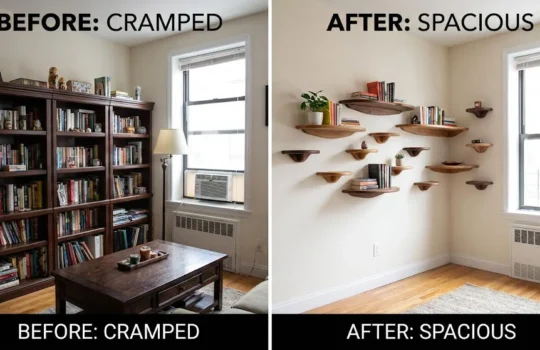
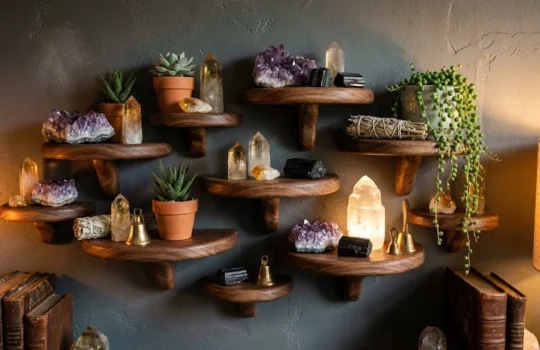
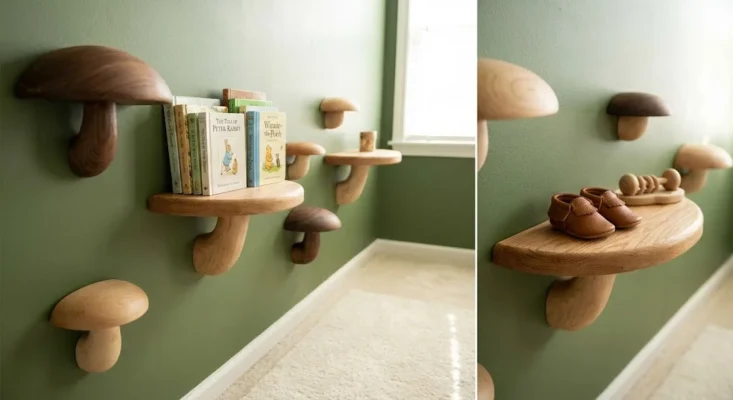
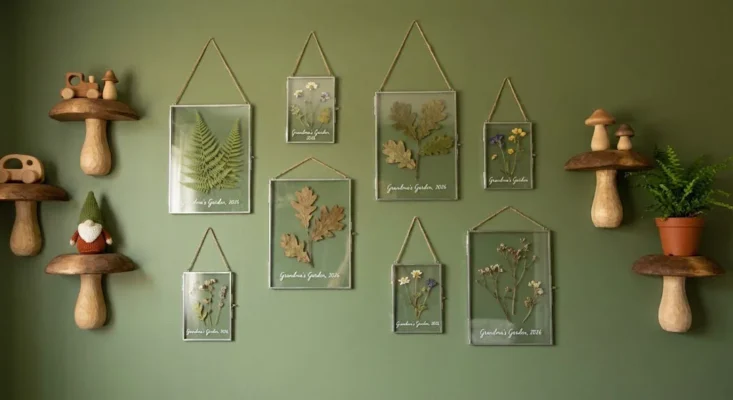
Mounted at varying heights, these solid wood shelves look as though they are growing directly out of the walls. They serve as the ultimate functional art for a nursery:
-
Floating Library: Use them to display classic board books with beautiful cover art.
-
Keepsake Display: A perfect spot for that first pair of leather moccasins or a handcrafted wooden rattle.
-
Safety First: Unlike heavy floor-standing bookshelves, these utilize negative space, keeping the floor clear for tummy time while having no sharp, low corners for a crawling baby to bump into.
The “Nest” Concept: Furnishing for Comfort
In 2026, the nursery is seen as a “cocoon.” Every piece of furniture should feel soft, rounded, and protective.
The Iconic Pieces:
-
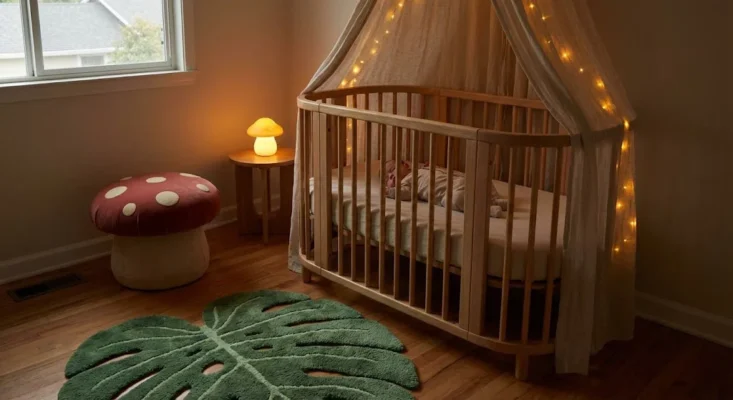
The Spindle Crib: Look for cribs made of sustainably harvested wood with rounded spindles, mimicking the look of vertical saplings in a forest.
-
The Toadstool Ottoman: A plush, velvet stool in a muted red with cream spots. It’s a functional seat for parents during late-night feedings and a fun “prop” for milestone photos.
-
The Leaf Rug: A thick, tufted wool rug shaped like a giant Monstera or Maple leaf. It provides a soft, biophilic texture for the baby to explore.
Lighting: The “Firefly” Effect
Lighting in a nursery shouldn’t just be about visibility; it’s about maintaining the baby’s circadian rhythm.
-
Amber Fairy Lights: String warm, low-wattage lights behind a sheer linen canopy to mimic the look of fireflies at dusk.
-
Mushroom Nightlights: Choose a 2026 smart-model that emits a soft amber glow (3000K or lower), which doesn’t inhibit melatonin production, ensuring a smoother transition back to sleep after midnight changings.
2026 Practicality: Tech in Disguise
While the room looks like it belongs in a 19th-century fairy tale, the 2026 Fairycore nursery is highly tech-integrated—it just doesn’t look like it.
-
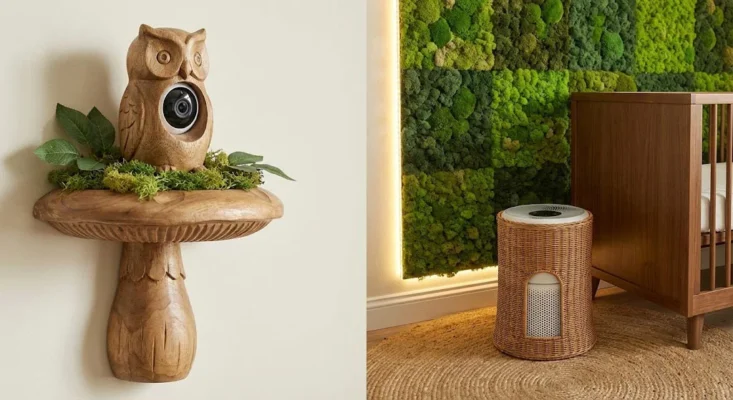
Hidden Monitors: Use a carved wooden housing to disguise your baby monitor, blending it into the “foliage” on a high mushroom shelf.
-
Acoustic Moss Walls: Modern nurseries often feature “preserved moss panels” that act as natural soundproofing, absorbing echoes and keeping the room whisper-quiet for naps.
-
Air Purifiers: Look for mây (rattan) or wooden-cased air purifiers that sit on the floor like a stump, ensuring the air is as fresh as a forest breeze.
DIY Touch: The Heritage Wall
A true Fairycore nursery needs a personal touch. One of the biggest trends this year is the “Heritage Wall”:
The Idea: Collect leaves, flowers, or small twigs from a park or a family garden. Press them into glass frames and hang them between your mushroom shelves. It’s a low-cost, high-impact way to bring real nature into the room.
A Place for Wonder to Grow
Designing a Fairycore nursery isn’t just about aesthetics; it’s about setting a stage for your child’s imagination. When a baby wakes up and sees a “forest” on their walls and “mushrooms” holding their favorite stories, they aren’t just in a room—they are in a world of possibility.
By choosing solid wood, organic shapes, and soft, earthy tones, you are creating a sanctuary that is timeless, sustainable, and truly magical.