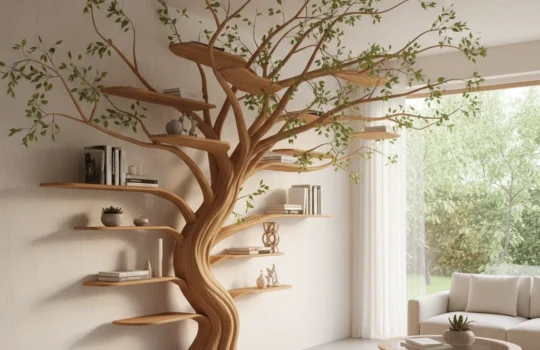
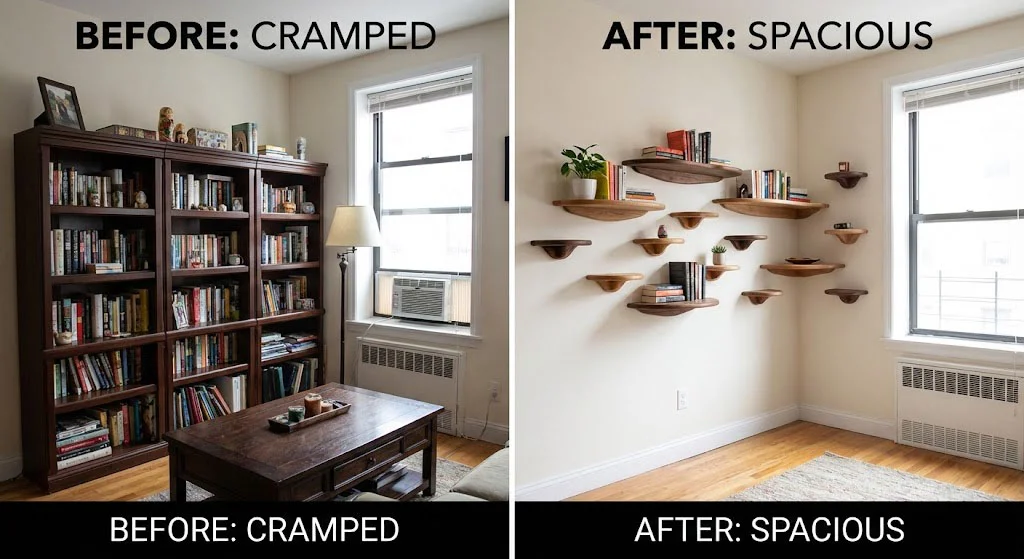
In the urban landscape of 2026, the “dream home” has been redefined. We are no longer measuring success solely by square footage, but by the intelligence of our design. In cities like New York, Seattle, Tokyo, and London, the micro-apartment is the new standard. But living small doesn’t have to feel small.
As floor space becomes the ultimate luxury, interior designers have looked to the walls for a Vertical Revolution. At the forefront of this movement is a piece that is equal parts sculpture and solution: The Floating Mushroom Shelf. Here is why these organic ledges are the ultimate “cheat code” for urban living in 2026.
Beyond the Grid: Why Organic Shapes Win
Most urban apartments are boxes filled with more boxes. Your bed is a rectangle, your desk is a rectangle, and traditional shelving is almost always a series of rigid, 90-degree planks. This creates a “grid-lock” effect that makes small rooms feel claustrophobic.
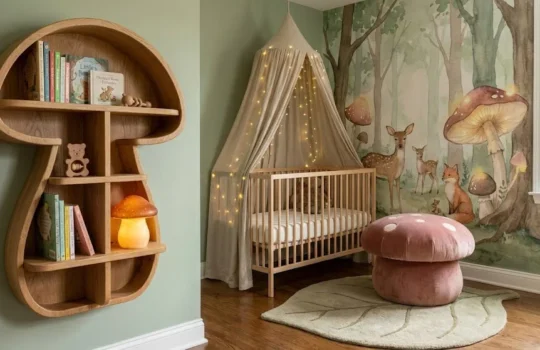
In 2026, Biophilic Design—the practice of connecting indoor spaces to the natural world—is no longer a trend; it’s a wellness requirement. Mushroom shelves mimic the growth patterns of the forest floor. By breaking the straight lines of a room with soft, organic curves, you trick the brain into perceived expansiveness.
Curves allow the eye to glide across the wall rather than hitting a sharp corner and stopping. This “Visual Flow” reduces the mental weight of the furniture, making a 400-square-foot studio feel like a breathable sanctuary.
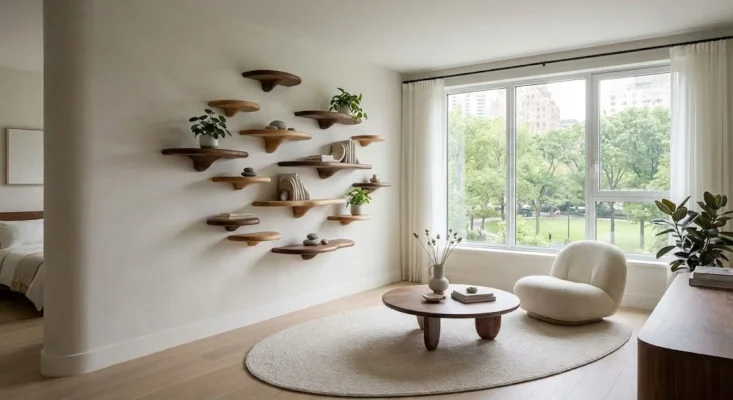
Strategic Placement: “Growing” Space in Every Room
The beauty of the mushroom shelf lies in its versatility. Because it lacks bulky brackets or floor legs, it can occupy “dead zones” where traditional furniture simply cannot fit.
Urban Room-by-Room Guide
| Room | The “Space Pain” | The Mushroom Solution |
| The Entryway | No room for a console table for keys and mail. | A cluster of 3 small ledges creates a “drop zone” without blocking the walkway. |
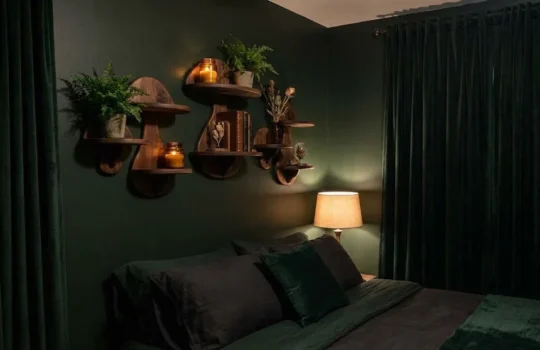
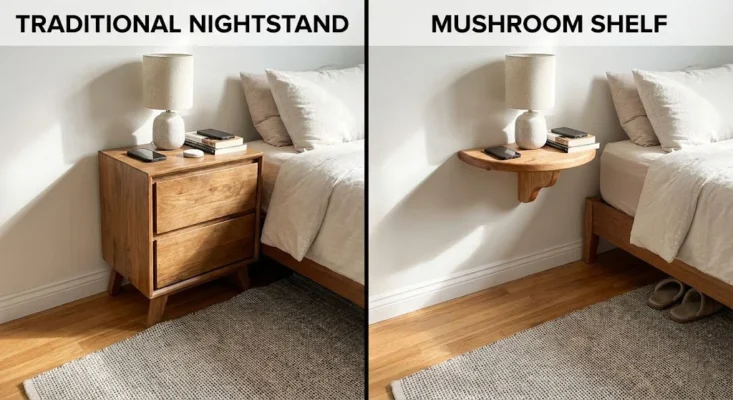
| The Bedside | A standard nightstand blocks the closet door or the path to the bed. | A single large mushroom ledge holds your phone and water, keeping the floor 100% clear. |
| The Kitchenette | Zero counter space for spices or a small herb garden. | Vertical “stacks” of shelves near the window for fresh basil and jars. |
| The Bathroom | Nowhere to put a candle or a guest towel. | Moisture-resistant Cedar mushrooms add warmth to cold tile walls. |
The “Nightstand Killer”: Reclaiming the Floor
In a micro-apartment, the floor is sacred. Every inch of floor space occupied by a leg of a table is an inch you can’t walk on.
The floating mushroom shelf is the “Nightstand Killer.” By mounting your bedside storage, you create Negative Space. This allows you to slide a rug all the way to the wall or even tuck a pair of slippers underneath, maintaining a clean, airy look that traditional furniture destroys. In 2026, a clear floor is the fastest way to make a tiny apartment look “Expensive.”
Technical Specs: Small Scale, Big Strength
A common misconception is that “floating” means “fragile.” In 2026, advancements in mounting hardware have made these shelves surprisingly robust.
Solid Wood vs. Synthetics: For urban longevity, Solid Walnut or White Oak is king. Unlike MDF or plastic, solid wood can be sanded and refinished if it gets scuffed during a move.
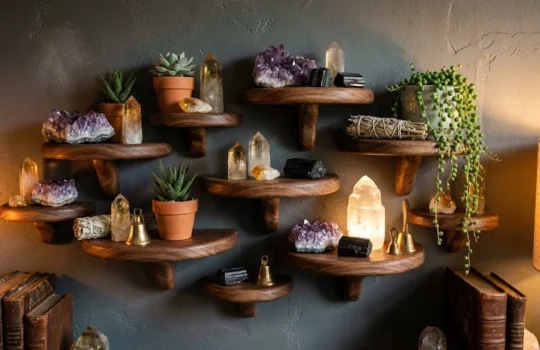
Load-Bearing Capacity: A high-quality handcrafted mushroom shelf can typically hold between 10 to 25 lbs depending on the mounting system. That is more than enough for a heavy lamp, a stack of books, or a collection of crystals.
The Renter-Friendly Hack: For 2026 apartment dwellers who can’t drill into brick or plaster, new High-Bond Adhesive Mounts allow for lightweight mushroom ledges (up to 5 lbs) to be installed and removed without a single hole.
The 2026 Sustainability Factor
Urban consumers are increasingly wary of “fast furniture”—cheap pieces that end up in landfills after two years. Mushroom shelves represent the “Heirloom Minimalist” movement.
By investing in a piece carved from a single block of sustainable timber, you are buying a product that lasts a lifetime. It’s a “Slow Decor” approach: one beautiful, functional piece of wood is worth more than five plastic shelves. In the era of climate consciousness, choosing materials like Aromatic Cedar or Reclaimed Elm isn’t just a style choice; it’s a statement of values.
Pro Styling Tips for Tiny Walls
To make your mushroom shelves look like a curated gallery rather than a random growth, follow these 2026 styling rules:
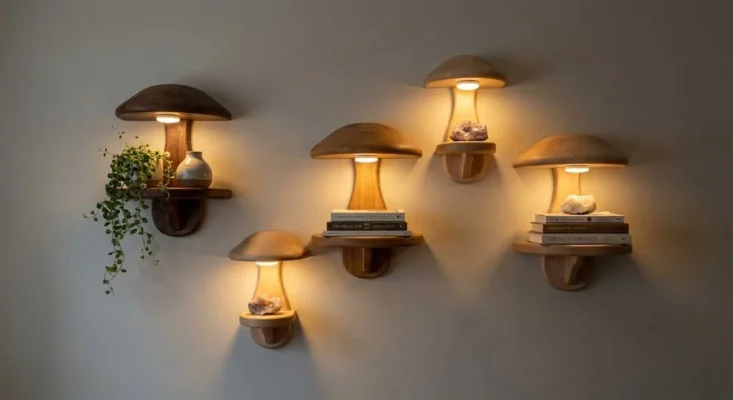
The Rule of Odds: Always install in groups of 3 or 5. A single mushroom can look lonely; a cluster looks like a deliberate installation.
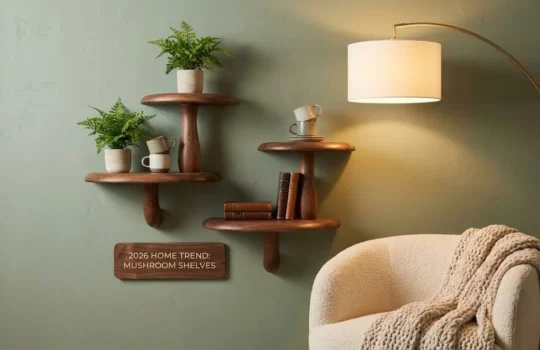
Vary the Altitudes: Don’t align them horizontally. Stagger them so the “tallest” item on a lower shelf doesn’t hit the bottom of the shelf above it.
The “Under-Glow”: In 2026, smart-home lighting is everywhere. Stick a tiny, battery-powered LED puck under the “cap” of the mushroom. At night, it will cast a warm halo downward, turning your shelf into a dramatic light fixture.
Big Living in Small Squares
An urban apartment shouldn’t feel like a cage; it should feel like a cockpit—everything you need, exactly where you need it, with nothing in your way.
Floating mushroom shelves are the ultimate solution because they respect the constraints of the city while providing the soul of the forest. They prove that you don’t need a massive floor plan to have massive style. By looking up and utilizing your walls, you aren’t just decorating; you are reclaiming your freedom to move.